Section 54 Mistakes: Do You See Yourself in These 4 Stories?
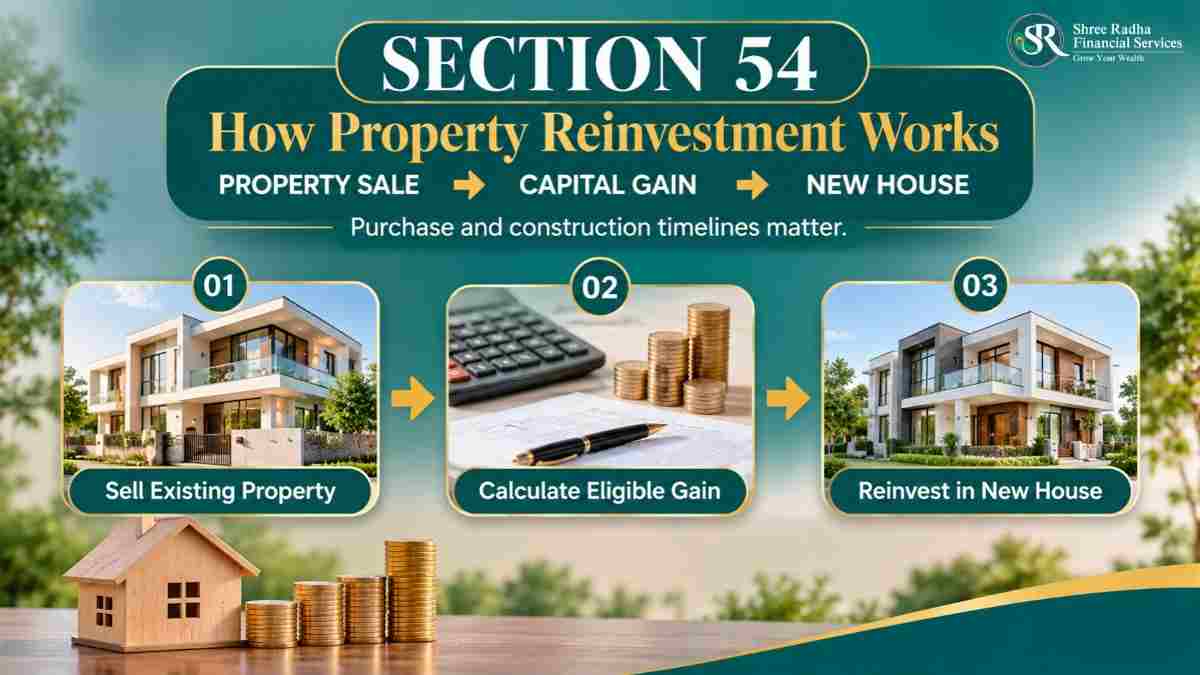
Section 54 is the rule most property sellers have heard of. Sell a house, put the gain into another house, and the gain may not be taxed. But the rule has conditions, and small mistakes can cost a lot.
From 1 April 2026, this rule is in Section 82 of the Income-tax Act 2025. Its cousins are Section 86 (earlier Section 54F) and Section 85 (earlier Section 54EC). Here are four people from four cities. Read their stories and ask yourself: “Am I doing the same?”
These stories are illustrative, based on common situations. Names, amounts and details are changed, and they are not individual tax advice. Tax amounts are simple examples and ignore surcharge and cess.
“A house is the biggest purchase most families make. The tax rule should be read before the booking amount is paid, not after the return is filed.” — Paresh Chaudhary
Story 1: Ramesh in Hyderabad – “I Bought Another Flat, So the Whole Gain Is Exempt”
Ramesh sold his old flat in Hyderabad. His long-term capital gain was ₹50 lakh. Within a year, he bought a new flat for ₹30 lakh.
He told his tax filer, “I have bought another house, so the gain is exempt.” He did not keep the remaining money anywhere special.
What went wrong. The exemption is limited to the cost of the new house. His gain was ₹50 lakh, but the new flat cost only ₹30 lakh. The extra ₹20 lakh was taxable. At 12.5%, that is ₹2.5 lakh, plus cess.
The right way.
- If the cost of the new house is equal to or more than the gain, the whole gain is not charged. If it is less, the excess is charged (Section 82(1)).
- Gain that is not yet used must be deposited in a notified scheme before the return is filed, and not later than the return due date. It can then be used within the time limit (Section 82(2)).
- If the deposited money is not used in time, it is taxed (Section 82(4)).
- Ask your CA to work out the figures before you buy, so you know how much to reinvest.
Story 2: Prakash in Nagpur – “I Reinvested the Whole Gain From My Shares”
Prakash sold shares and mutual fund units that he had held for more than 12 months. His net sale value was ₹1.2 crore, and his long-term gain was ₹40 lakh.
He bought a house and put in ₹40 lakh, which was equal to his gain. He thought, “I reinvested the whole gain, so the whole gain is exempt.”
What went wrong. For gains from assets other than a house, the rule is different. The test is the net sale value, not the gain. So the exemption is proportionate.
- Exempt gain = ₹40 lakh × (₹40 lakh ÷ ₹1.2 crore) = about ₹13.33 lakh.
- The remaining about ₹26.67 lakh stays taxable as a long-term gain.
The right way.
- For a long-term gain from any asset other than a house, such as shares, units or land, the exemption depends on how much of the net consideration goes into the new house (Section 86(1), earlier Section 54F).
- If the full net sale value is invested, the whole gain is exempt. If less, the exemption is in the same proportion.
- Read our guide on mutual fund taxation to see how the gain on units is worked out first.
Story 3: Dinesh in Kolkata – “I Already Own Two Flats, But This One Is New”
Dinesh sold shares and made a long-term gain of ₹30 lakh. He bought a new flat for ₹1 crore to claim the exemption.
He already owned two other flats in Kolkata, and both were rented out.
What went wrong. Section 86 does not apply if you own more than one other residential house on the date of the sale. Dinesh owned two. He lost the exemption, even though the new flat was bigger than the sale value.
The right way.
- The exemption is not available if, on the date of sale, you own more than one residential house other than the new one, and the income from it is taxed as house property (Section 86(5)).
- It is also not available if you buy another house within one year of the sale, or build another within three years (Section 86(5)). In some cases the exemption already given can be reversed (Section 86(6)).
- Check how many houses you and your family own, and how they are taxed, before you plan.
- Please ask your CA before you buy.
Story 4: Mahendra in Jaipur – “I Invested the Whole Gain in Bonds Later”
Mahendra sold a plot in Jaipur. His long-term gain was ₹80 lakh. He had heard of “54EC bonds”, so he invested ₹80 lakh in the bonds. But he did it eight months after the sale.
What went wrong. There are two limits, and he missed both. The bonds must be bought within six months of the sale. And the investment counted for the exemption cannot be more than ₹50 lakh.
The right way.
- For a gain from land or a building, you can invest within six months in specified bonds (NHAI, REC or notified bonds), and the gain invested is not charged (Section 85(1), earlier Section 54EC).
- The investment counted is capped at ₹50 lakh, either in one tax year or across the year of the sale and the next (Section 85(2)).
- If the bonds are sold, or a loan is taken against them, within five years, the exemption is withdrawn (Section 85(3), (4)).
- The same money cannot also be claimed as a deduction under Section 123 (Section 85(5)).
Section 54 (Now Section 82): Sale of a House, in Simple Words
Section 54 of the old Act is now Section 82. It applies when an individual or HUF has a long-term capital gain from selling a residential house, whose income is taxed as house property.
- Long-term for a house means held for more than 24 months (Section 2(101)).
- You must buy one new house in India one year before or two years after the sale, or build one within three years after it (Section 82(1)).
- If the cost of the new house is at least the gain, no gain is charged. If it is less, only the excess is charged.
- If you sell the new house within three years, its cost is reduced by the gain that was exempt, so the gain comes back into tax (Section 82(1)).
- Two houses: if the gain is up to ₹2 crore, you can choose two houses instead of one. This option can be used only once (Section 82(5), (6)).
- Caps: amounts above ₹10 crore are not counted (Section 82(7), (8)).
Example A: A House Sale Under Section 82
A family sells a flat for ₹1.5 crore. They bought it for ₹60 lakh and spent ₹10 lakh on improvements. The long-term gain is ₹1.5 crore − ₹70 lakh = ₹80 lakh.
| New house cost | Exempt gain | Taxable gain | Tax at 12.5% (simple example) |
|---|---|---|---|
| ₹95 lakh | ₹80 lakh (all) | ₹0 | ₹0 |
| ₹80 lakh | ₹80 lakh (all) | ₹0 | ₹0 |
| ₹50 lakh | ₹50 lakh | ₹30 lakh | ₹3.75 lakh |
If the family sells the new house within three years, its cost for tax is reduced by the exempt gain, and the gain comes back into tax. If the property was bought before 23 July 2024, the tax on any taxable part may be lower under the Section 197(3) choice below. Please ask your CA to check your own figures.
Section 54F (Now Section 86): When the Gain Is Not From a House
Section 54F is now Section 86. It covers a long-term gain from any asset other than a residential house. That includes shares, mutual fund units, land and gold.
- The test is the **net consideration**, which is the sale value minus the expenses of the sale (Section 86(10)).
- If the net consideration is invested in the new house, the whole gain is exempt. If less, the exempt part is: gain × (cost of new house ÷ net consideration) (Section 86(1)).
- The time limits for buying or building are the same as Section 82.
- It does not apply if you own more than one other house on the date of sale, or buy or build another within one or three years (Section 86(5)).
- If the new house is sold within three years, the exemption is withdrawn (Section 86(7)).
- Amounts above ₹10 crore are not counted (Section 86(8), (9)).
Example B: Shares and Funds, Net Sale Value ₹1.2 Crore, Gain ₹40 Lakh
| New house cost | Working | Exempt gain | Gain still taxable |
|---|---|---|---|
| ₹1.2 crore | Full net value invested | ₹40 lakh | ₹0 |
| ₹80 lakh | ₹40 lakh × 80 ÷ 120 | About ₹26.67 lakh | About ₹13.33 lakh |
| ₹40 lakh | ₹40 lakh × 40 ÷ 120 | About ₹13.33 lakh | About ₹26.67 lakh |
On the taxable part of a listed equity or equity fund gain, the ₹1.25 lakh limit under Section 198 may also apply. Please ask your CA how the two work together.
Section 54EC (Now Section 85): Bonds for Gains From Land or Building
This rule is for a long-term gain from land or a building, not only a house. It is not about buying a house. It is about investing in specified bonds.
- Invest within six months of the sale.
- The bonds are those of NHAI, REC or any other bond notified by the Government, redeemable after five years.
- The investment counted cannot be more than ₹50 lakh in total (Section 85(2)).
- Lock-in is five years. A loan against the bonds counts as selling them.
Example C. A plot is sold with a long-term gain of ₹70 lakh. The seller invests ₹50 lakh in specified bonds within six months. ₹50 lakh of the gain is not charged. The other ₹20 lakh is taxable. If the bonds are sold in year four, the ₹50 lakh comes back into tax.
Section 54 vs 54F vs 54EC: Which Section Applies to Your Gain?
| Point | Section 82 (earlier 54) | Section 86 (earlier 54F) | Section 85 (earlier 54EC) |
|---|---|---|---|
| What you sell | A residential house | Any asset other than a house (shares, units, land, gold) | Land or building |
| What you buy | One house in India (or two, once, if the gain is up to ₹2 crore) | One house in India | Specified bonds |
| What you must reinvest | The gain | The net sale value | The gain, up to ₹50 lakh |
| Time | 1 year before, 2 years after, or build in 3 years | Same | 6 months after the sale |
| Hold the new asset | 3 years | 3 years | 5 years |
| Cap | ₹10 crore | ₹10 crore | ₹50 lakh |
If You Have Not Used the Money by the Return Date
For Sections 82 and 86, unused money must be deposited in a bank or institution under a scheme notified by the Government. This was earlier called the Capital Gains Accounts Scheme. The deposit must be made before you file your return, and not later than the return due date under Section 263(1). Proof of the deposit goes with the return.
If the deposited money is not used in time, the unused part is taxed in the tax year in which three years from the sale end, and you can withdraw it under the scheme. Please ask your bank for the current form and process, and confirm the dates with your CA.
How Tax on Property Gains Is Worked Out
- Short-term or long-term: land and buildings held for 24 months or less are short-term, and taxed at slab rates. After 24 months they are long-term (Section 2(101)).
- Long-term rate: 12.5% (Section 197), plus cess and surcharge.
- Exemptions first: any exemption under Sections 82, 85 or 86 reduces the gain before the rate applies.
The Choice for Property Bought Before 23 July 2024 (Section 197(3))
For a resident individual or HUF selling land or a building acquired before 23 July 2024, the tax is the lower of two methods:
- 12.5% on the gain without indexation, or
- 20% on the gain computed with indexed cost of acquisition and indexed cost of improvement.
Example D (illustrative). A plot bought for ₹20 lakh is sold for ₹1 crore. The indexed cost depends on the cost inflation index notified by the Government. The table shows two imaginary indexed costs.
| Case | 12.5% without indexation | 20% with indexation | Tax payable |
|---|---|---|---|
| Indexed cost ₹36 lakh (a newer purchase) | Gain ₹80 lakh × 12.5% = ₹10 lakh | Gain ₹64 lakh × 20% = ₹12.8 lakh | ₹10 lakh |
| Indexed cost ₹60 lakh (an older purchase) | Gain ₹80 lakh × 12.5% = ₹10 lakh | Gain ₹40 lakh × 20% = ₹8 lakh | ₹8 lakh |
These indexed costs are imaginary, and the official cost inflation index is notified by the CBDT. Property bought on or after 23 July 2024 is taxed at 12.5% without indexation. Please ask your CA to work out your own figures.
The Stamp Duty Value Rule (Section 78, Earlier 50C)
If you sell land or a building for less than the stamp duty value, the stamp duty value can be taken as the sale value for tax (Section 78(1)). There is a safe zone. If the stamp duty value is not more than 110% of what you received, your actual sale value is used.
- Sale at ₹90 lakh, stamp duty value ₹98 lakh (about 109%): the sale value of ₹90 lakh is used.
- Sale at ₹90 lakh, stamp duty value ₹1 crore (about 111%): ₹1 crore is taken as the sale value.
If the agreement date and the registration date are different, and you received part of the money by a banking mode on or before the agreement date, the stamp duty value on the agreement date can be used. Please ask your CA how it applies to your sale.
If You Are an NRI
Sections 82 and 86 speak of an “individual or HUF”. TDS on the sale and the lower deduction certificate are separate rules for NRIs. We have covered them in our guides on NRO repatriation after selling property in India and NRI land and property rules in India. Please ask your CA before you sell.
Common Mistakes and Myths About Section 54
| What people believe | What the Act says |
|---|---|
| “Buying any house makes the whole gain exempt.” | The exemption is limited to the cost of the new house (Section 82). |
| “For shares, I only need to reinvest the gain.” | You need to reinvest the net sale value, and the exemption is proportionate (Section 86). |
| “I can buy two houses every time.” | Two houses only once, and only if the gain is up to ₹2 crore (Section 82(5), (6)). |
| “I can sell the new house whenever I like.” | Selling within three years brings the gain back into tax. |
| “Owning many houses does not matter.” | More than one other house blocks Section 86 (Section 86(5)). |
| “I can invest in bonds any time after the sale.” | Within six months, up to ₹50 lakh (Section 85). |
| “Indexation is gone for everyone.” | For land or building bought before 23 July 2024, a resident individual or HUF gets the lower of two methods (Section 197(3)). |
Already Made a Mistake? Steps You Can Take
- Stay calm. Many filing issues can be corrected.
- Gather your sale deed, purchase deed, bank statements and any deposit proof.
- Meet your CA and ask whether a revised return (Section 263(5)) or an updated return (Section 263(6)) is suitable.
- Do not file a new return on guesswork. Time limits and extra tax can apply, so act early.
Before You Sell: A Quick Checklist
- What am I selling: a house, a plot, shares or units?
- Is the gain long-term?
- Which section could apply: 82, 86 or 85?
- How many houses do I own today?
- By which date must I buy, build, invest or deposit?
- Was the property bought before 23 July 2024?
- Is the sale value close to the stamp duty value?
Official Sources to Read
- Sections 2(101), 78, 82, 85, 86 and 197 of the Income-tax Act 2025, on the Income Tax Department website.
- Return forms and instructions on the e-filing portal.
This is general education. For your own case, please talk to a competent CA or tax consultant before you decide. For how your total tax is worked out, read our guide on income tax computation in simple language.
How SR Wealth Can Help
We are an AMFI Registered Mutual Fund & SIF Distributor and an APMI Registered PMS Distributor. We do not give tax advice. Please keep your CA or tax consultant for all tax decisions and filing.
After a property sale, many families hold a large amount for a while before they decide the next step. We help you plan where this money can wait, based on your timeline, your goals and your comfort with risk. We can:
- Help you plan an emergency fund and a buffer before a big purchase
- Explain mutual fund options for money that you may need in the short term or the long term
- Set up mutual fund SIPs for long-term goals
- Explain SIF, PMS and AIF solutions, where they are suitable for you
- Arrange insurance solutions that protect family and business risk
- Connect you with a competent CA or tax consultant if you need one for your salary tax, return or notice
If you are an NRI selling property, you can also read our guide on where Gulf NRIs put property sale proceeds.
Mutual fund investments are subject to market risks. Please read all scheme-related documents carefully before investing.
Rules and rates change from time to time. Please confirm with your tax consultant / CA. Last verified on 3 November 2026.
Frequently Asked Questions
1. What is Section 54 under the Income-tax Act 2025?
Section 54 of the old Act is now Section 82. It can exempt a long-term gain from the sale of a residential house if you buy or build another house within the time limit.
2. What is the time limit to buy or build the new house?
Buy one year before or two years after the sale, or build within three years after it (Section 82(1)).
3. Can I buy two houses?
Only if the gain is up to ₹2 crore, and only once in your life (Section 82(5), (6)).
4. What if I have not used the gain by the return date?
The unused amount must be deposited in the notified scheme before you file, and not later than the return due date (Section 82(2)).
5. What happens if I sell the new house within three years?
Its cost for tax is reduced by the gain that was exempt, so the gain comes back into tax (Section 82(1)).
6. Can I use gains from shares or mutual funds to buy a house?
Section 86 (earlier 54F) can exempt a long-term gain if the net sale value is invested in a house. The exemption is proportionate, and conditions apply.
7. Who can claim Section 85 (earlier 54EC) bonds?
A person with a long-term gain from land or a building who invests within six months in specified bonds, up to ₹50 lakh, with a five-year lock-in.
8. How is tax on a property sale worked out?
Long-term gains are taxed at 12.5%. For property bought before 23 July 2024, a resident individual or HUF pays the lower of 12.5% without indexation and 20% with indexation (Section 197(3)).
9. What is the stamp duty value rule?
If you sell for less than the stamp duty value, the stamp duty value can be taken as your sale value. If it is not more than 110% of your sale value, your sale value is used (Section 78).
10. Is the tax deducted by the buyer my final tax?
Not necessarily. Tax deducted by the buyer is a part payment against your tax. Your final tax depends on your gain, your exemptions and your return. Please confirm with your CA.
This article is also available on Medium for wider reading:https://medium.com/@shreeradha.services/section-54-now-section-82-4-costly-mistakes-property-sellers-make-tax-year-2026-27-32558b48bd88
Plan Your Next Step With Shree Radha Financial Services
Connect with Shree Radha Financial Services for a personalized discussion on investments and financial planning.
📞 Call/WhatsApp: +91 98791 13255
📧 Email: shreeradha.services@gmail.com
🌐 Visit: www.srwealth.co.in
📍 Shop 33, Mira Nagar 2, Dindoli Road, Surat 394210
Paresh Chaudhary
Founder, Shree Radha Financial Services, Surat
AMFI Registered Mutual Fund & SIF Distributor — ARN: 268390
APMI Registered PMS Distributor — APRN05763
Investing since 2012 | BE Mechanical, SVNIT Surat | Ex-L&T (15+ Years)
Educational Disclaimer: This article is published by Shree Radha Financial Services — an AMFI Registered Mutual Fund & SIF Distributor (ARN: 268390) and APMI Registered PMS Distributor (APRN05763). All content is strictly for educational purposes only and does not constitute individualized investment advice. Mutual fund investments are subject to market risks — read all scheme-related documents carefully before investing. Tax treatment is based on current laws and subject to change. Please consult a qualified tax professional before investing.